Published on Jan 2023 –
Updated on 10th Aug 2024
JoboGo: AR Career Exploration Game for Young Adults
A mobile game application that uses augmented reality and
geolocation technology to create playful interactions in the
real-life metaverse, helping young people discover their career
paths through engaging, location-based challenges.
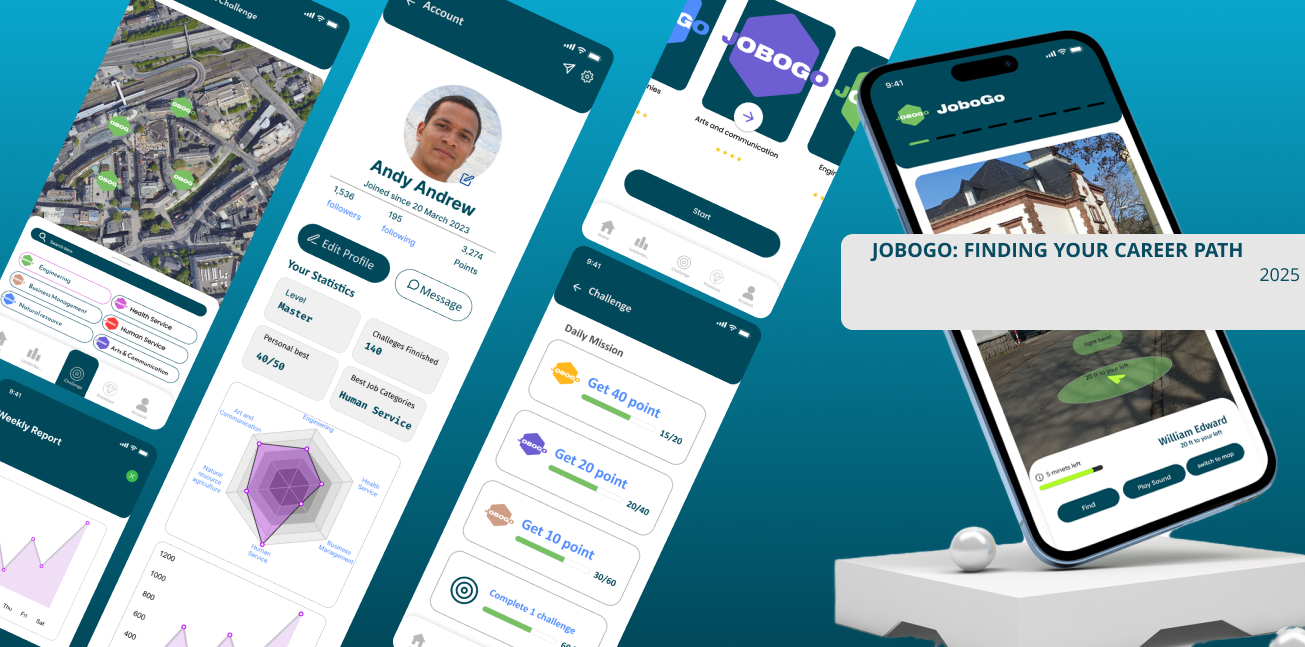
JoboGo Cover Presentation
My Role
Lead UX Researcher & UI/UX Designer - Conducted
participatory design, user research, prototyping, and
usability testing
Duration
Multi-phase study with 7 co-design sessions, 12 participants, 3 prototype iterations
Multi-phase study with 7 co-design sessions, 12 participants, 3 prototype iterations
Tools Used
Figma, MAXQDA, Miro, AR frameworks, Mobile GPS, Machine
Learning algorithms
Methods
Interviews, observations, usability testing, expert reviews,
cognitive walkthroughs, co-design
Research Questions
In today's rapidly evolving job market, many young people
struggle to find careers aligned with their interests. This
research addresses critical gaps in career exploration through
innovative technology.
How effective is JoboGo in helping young people discover
their job interests through augmented reality and
geolocation-based playful interactions?
RQ1: Effectiveness
RQ1: Effectiveness
How can JoboGo's design features be optimized to provide an
engaging and effective experience for career discovery in the
real-life metaverse?
RQ2: Design Optimization
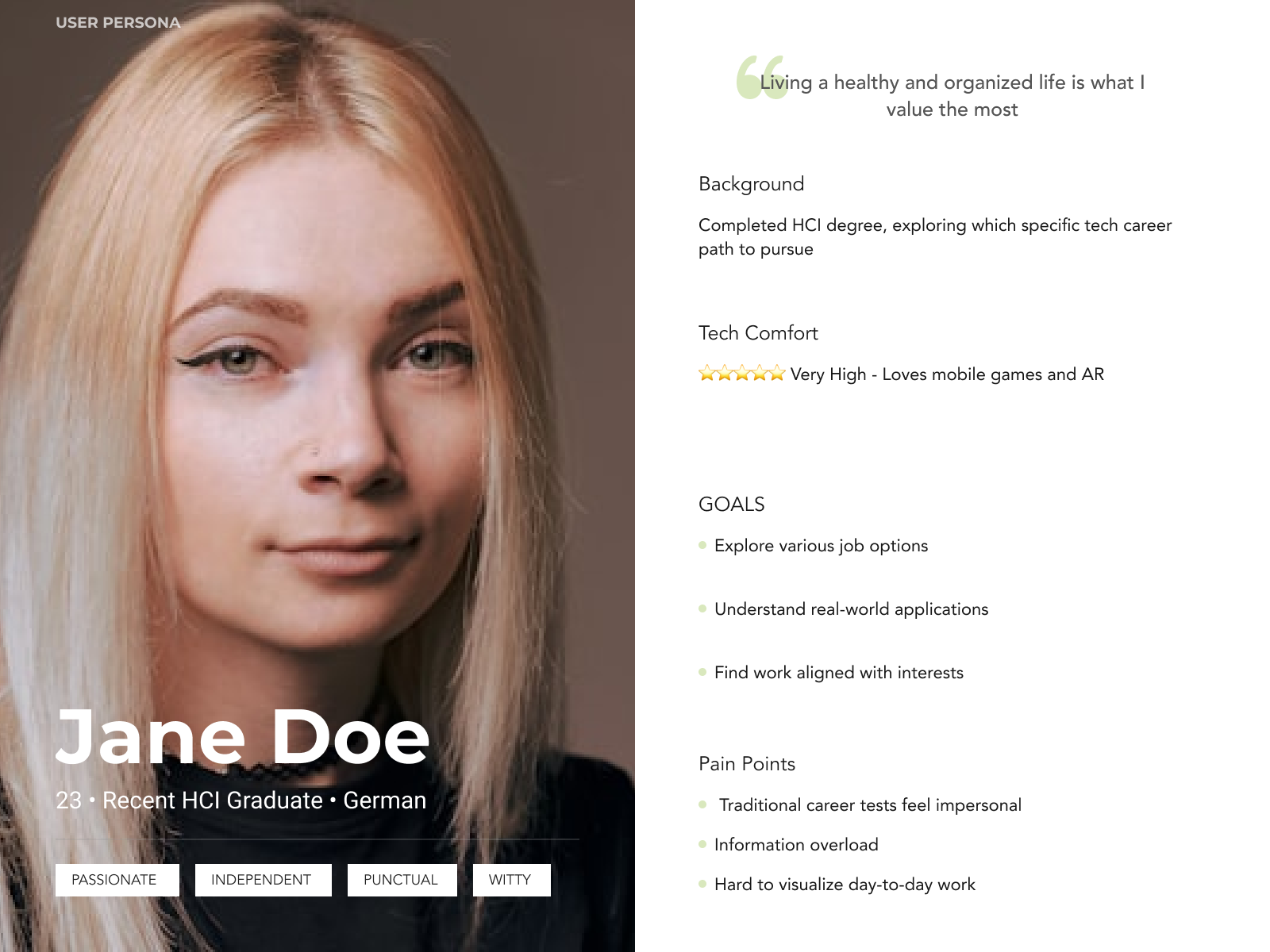
User Personas
Through research with 12 participants aged 19-35, we identified
key personas representing our target users.
Design Process & Methodology
Participatory Design Outcomes
1-2
Pre-Study Phase
Participants : P1-P4 (4 HCI students)
Methods : Semi-structured interviews, idea generation
Duration : 1-2 hours each
Outcome : Identified user needs, attitudes toward games/jobs, initial concept development
Participants : P1-P4 (4 HCI students)
Methods : Semi-structured interviews, idea generation
Duration : 1-2 hours each
Outcome : Identified user needs, attitudes toward games/jobs, initial concept development
3-5
V1.0 Appropriation
Participants : P1-P4
Methods : Usability testing, observation, interviews
Prototype : Campus-specific GPS questions
Outcome : Feedback on visual design, real-world interaction, identified need for location flexibility
Participants : P1-P4
Methods : Usability testing, observation, interviews
Prototype : Campus-specific GPS questions
Outcome : Feedback on visual design, real-world interaction, identified need for location flexibility
6
First Evaluation
Participants: P5-P9 (Fresh perspectives)
Methods: Usability testing, think-aloud protocol
Key Finding: 800+ meters is uncomfortable for users - reduced to 500m maximum
Participants: P5-P9 (Fresh perspectives)
Methods: Usability testing, think-aloud protocol
Key Finding: 800+ meters is uncomfortable for users - reduced to 500m maximum
7
V2.0 Mid-Appropriation
Participants : P10-P11
Methods: Usability testing, cognitive walkthrough
Major Changes: Added 6 career genres, AR integration, social features, gamification elements
Participants : P10-P11
Methods: Usability testing, cognitive walkthrough
Major Changes: Added 6 career genres, AR integration, social features, gamification elements
Concept Evolution
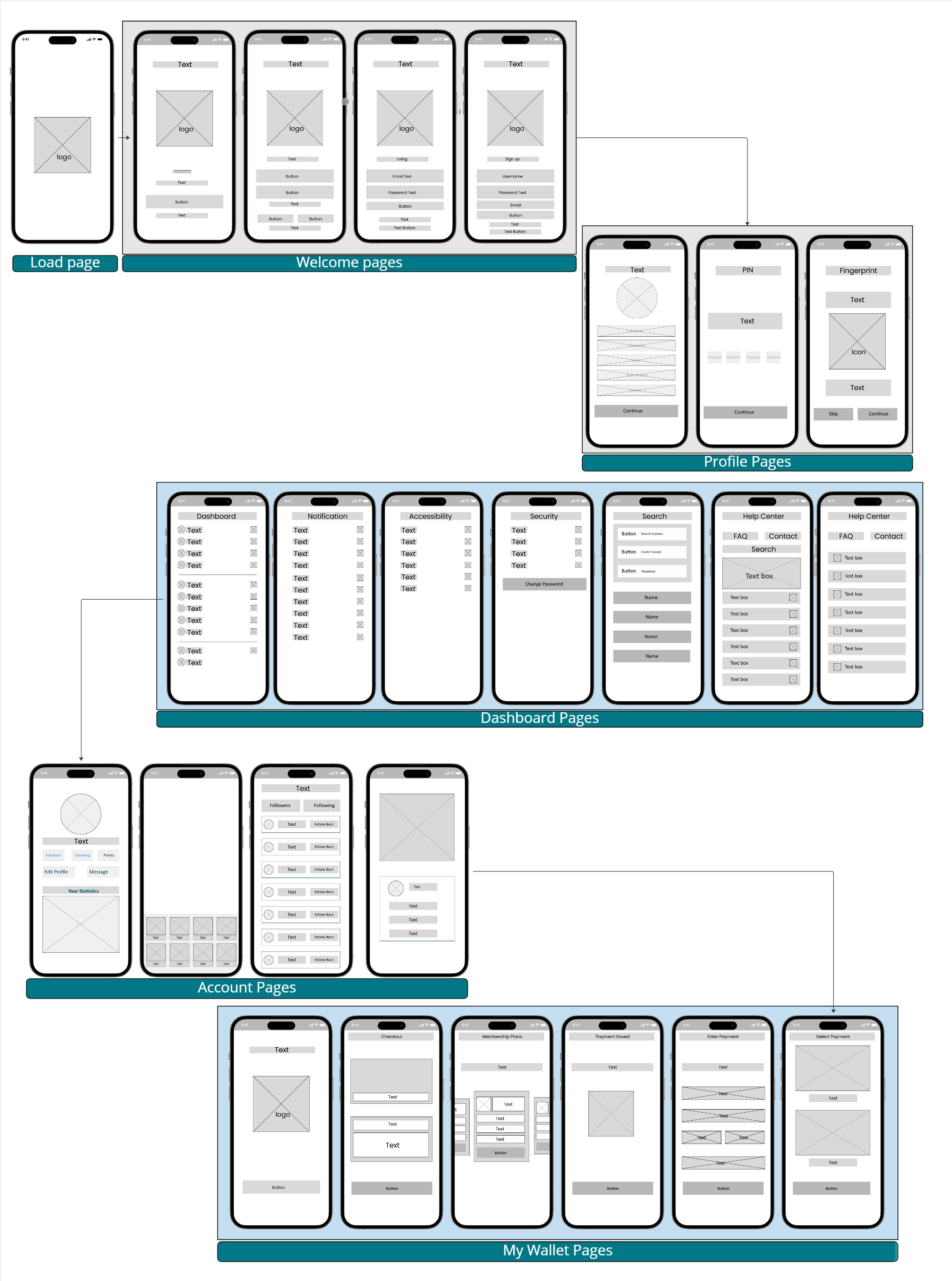
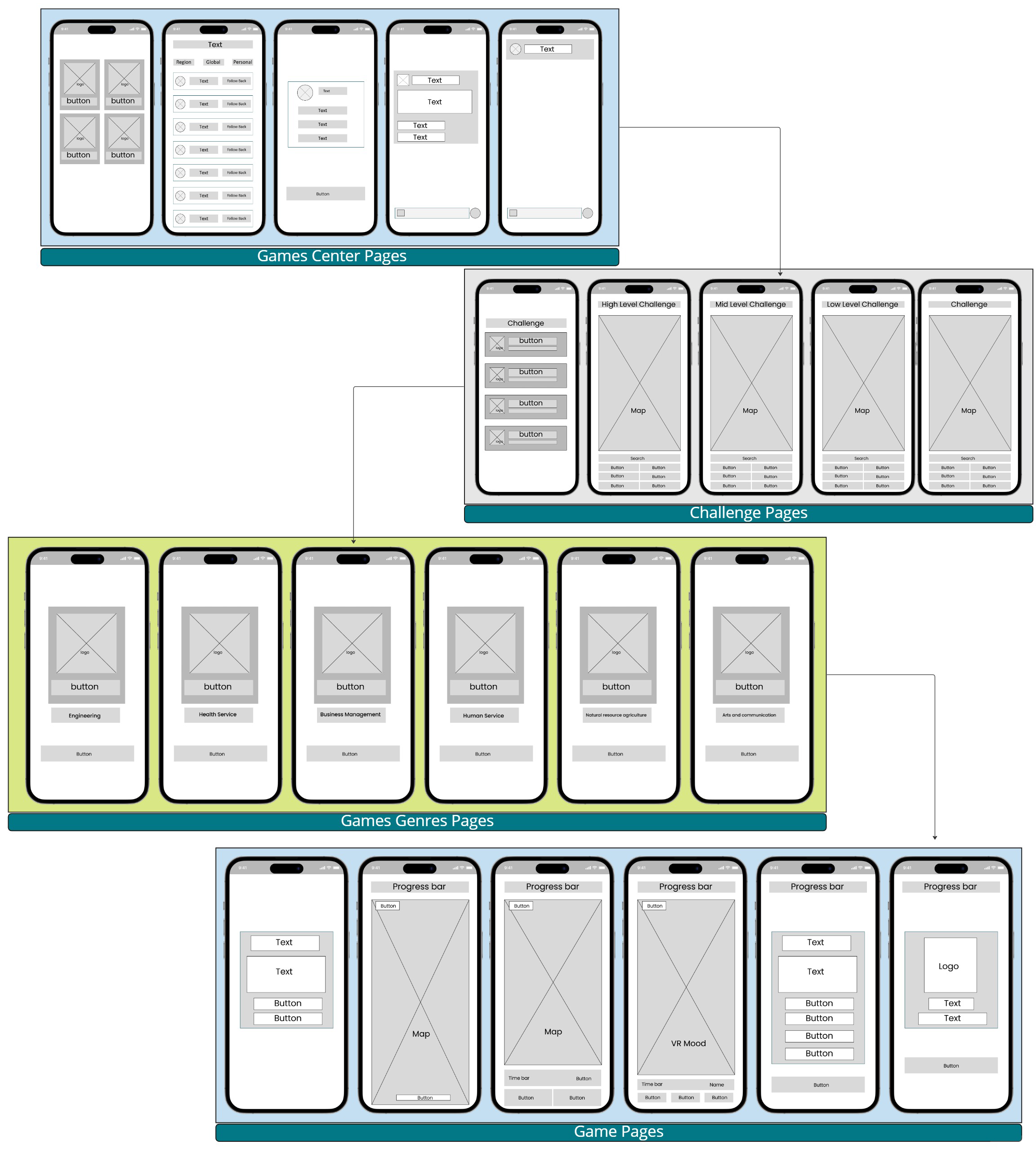
Wireframe Development
Wireframe Development
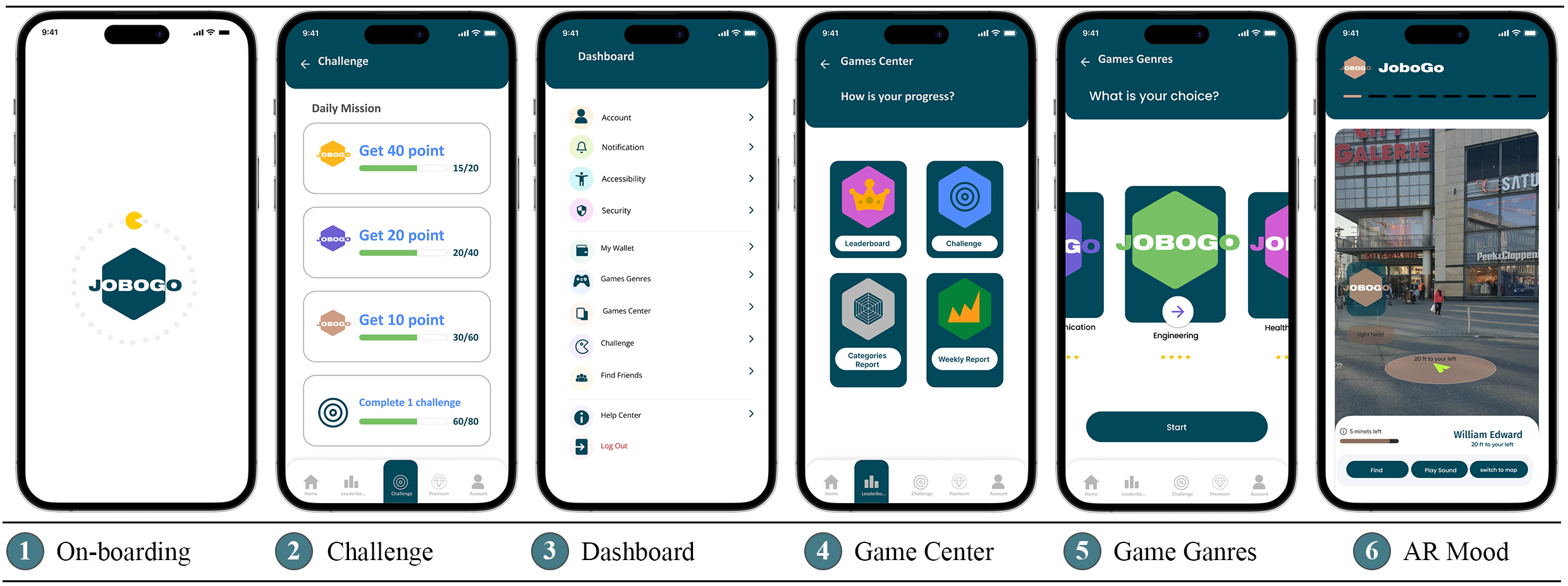
UI Design & Visual System
Designed in Figma with dark green as primary color
representing growth, new beginnings, and abundance.
Color-coded career categories for easy navigation.
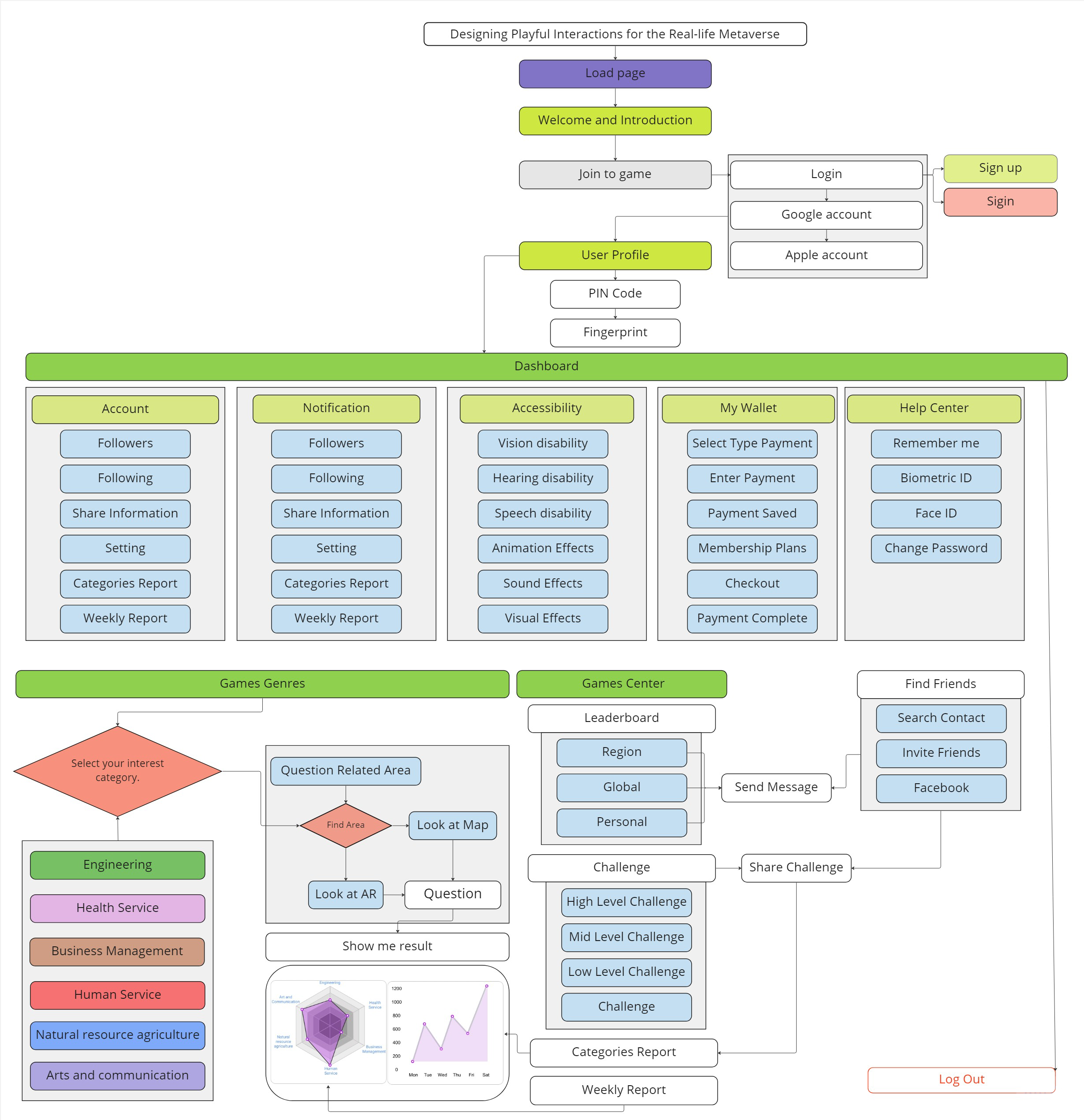
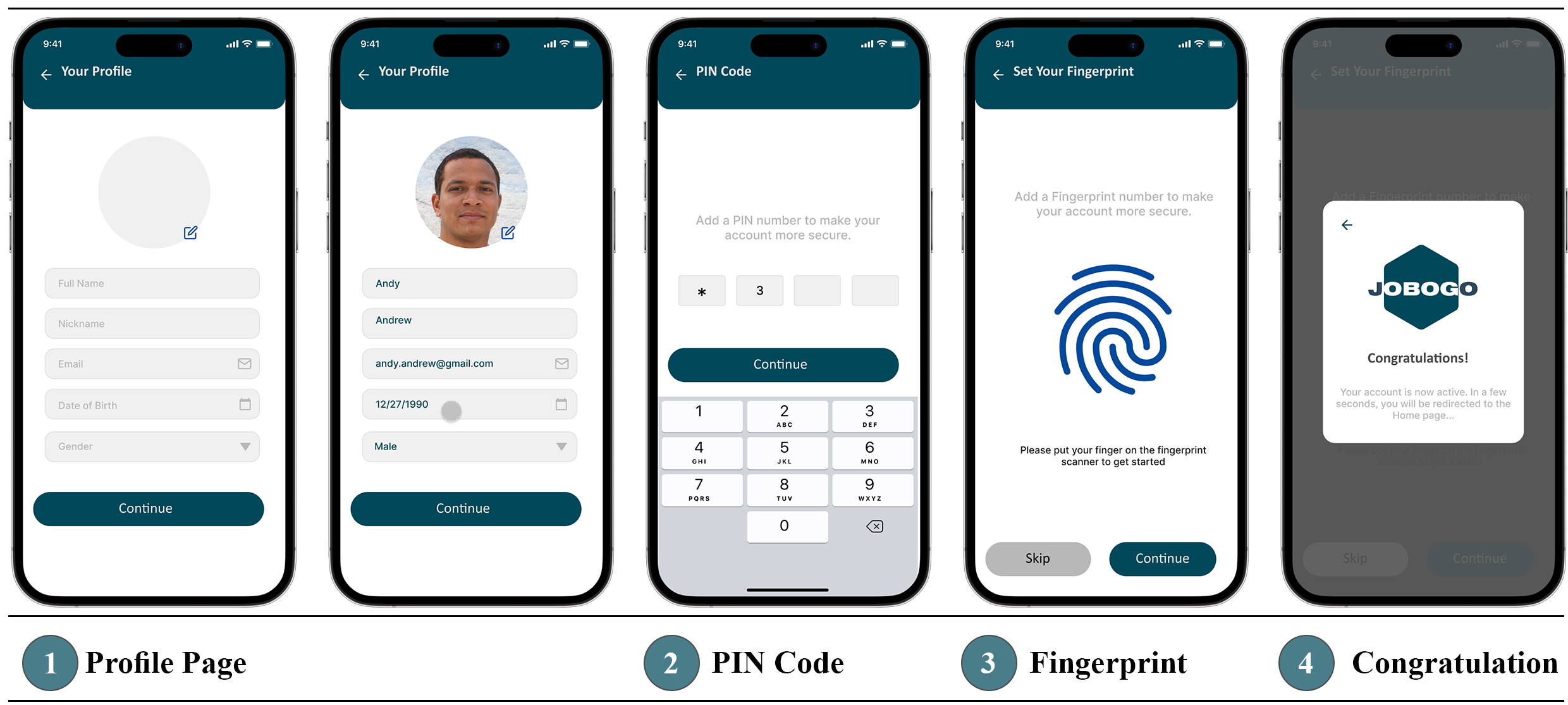
Registration & Profile Setup
Google/Apple login, sign up, recovery, profile creation,
PIN/fingerprint setup
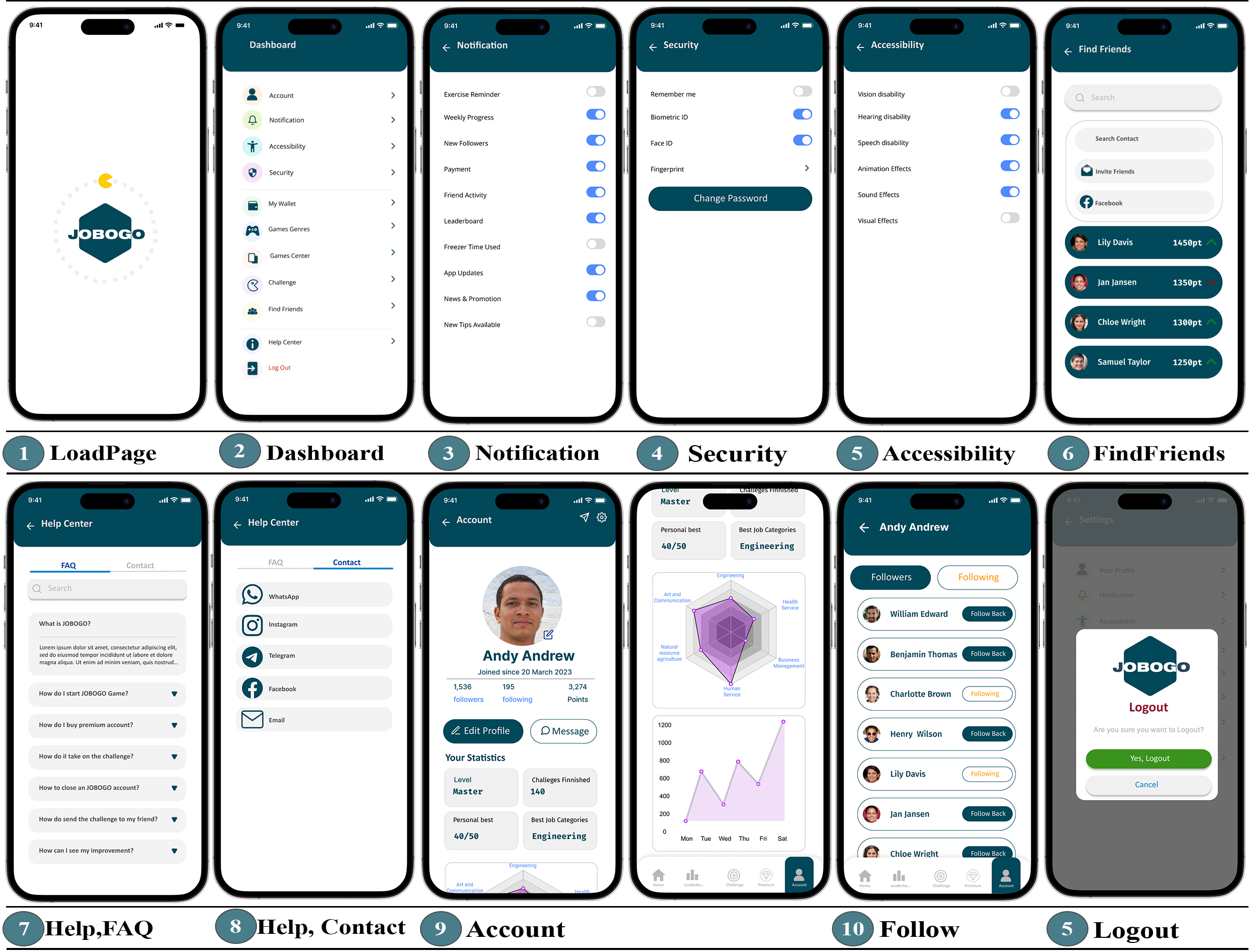
Dashboard & Navigation
Super Mario-inspired loading, main dashboard with all
features, notification/accessibility/security pages
Game Genres - Career Categories
Based on Nebraska Career Education Model - 6 color-coded
career fields:
⚙️
Engineering
Color: Green Energy, Manufacturing, Architecture, Transportation
Color: Green Energy, Manufacturing, Architecture, Transportation
🏥
Health Service
Color: Pink Biotechnology, Diagnostics, Health Informatics, Therapeutic Services
Color: Pink Biotechnology, Diagnostics, Health Informatics, Therapeutic Services
💼
Business Management
Color: Brown Marketing, Hospitality, Administration, Finance
Color: Brown Marketing, Hospitality, Administration, Finance
👥
Human Services
Color: Red Government, Law, Education, Public Safety
Color: Red Government, Law, Education, Public Safety
🌾
Natural Resources & Agriculture
Color: Blue Agribusiness, Animal Systems, Environmental Resources, Food Processing
Color: Blue Agribusiness, Animal Systems, Environmental Resources, Food Processing
🎯
Arts & Communication
Color: Purple Audio/Video, Graphic Design, Broadcasting, Performing Arts, IT
Color: Purple Audio/Video, Graphic Design, Broadcasting, Performing Arts, IT
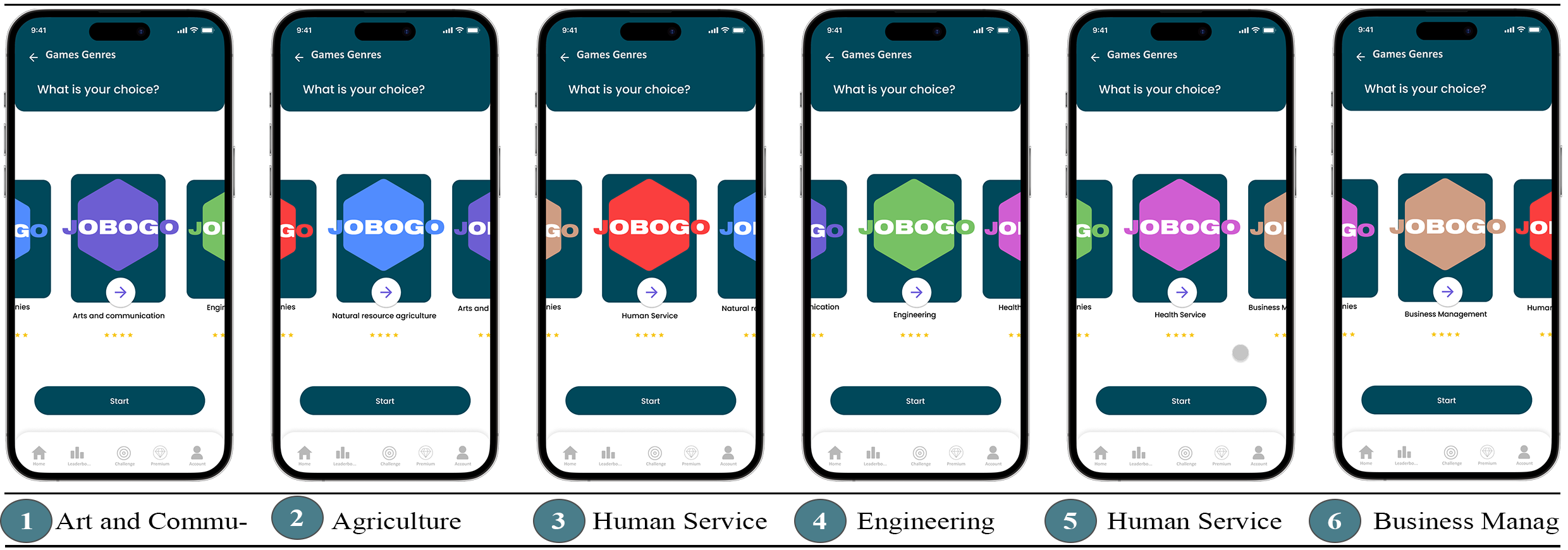
Game Genres Selection Screen
6 color-coded career category cards with descriptions
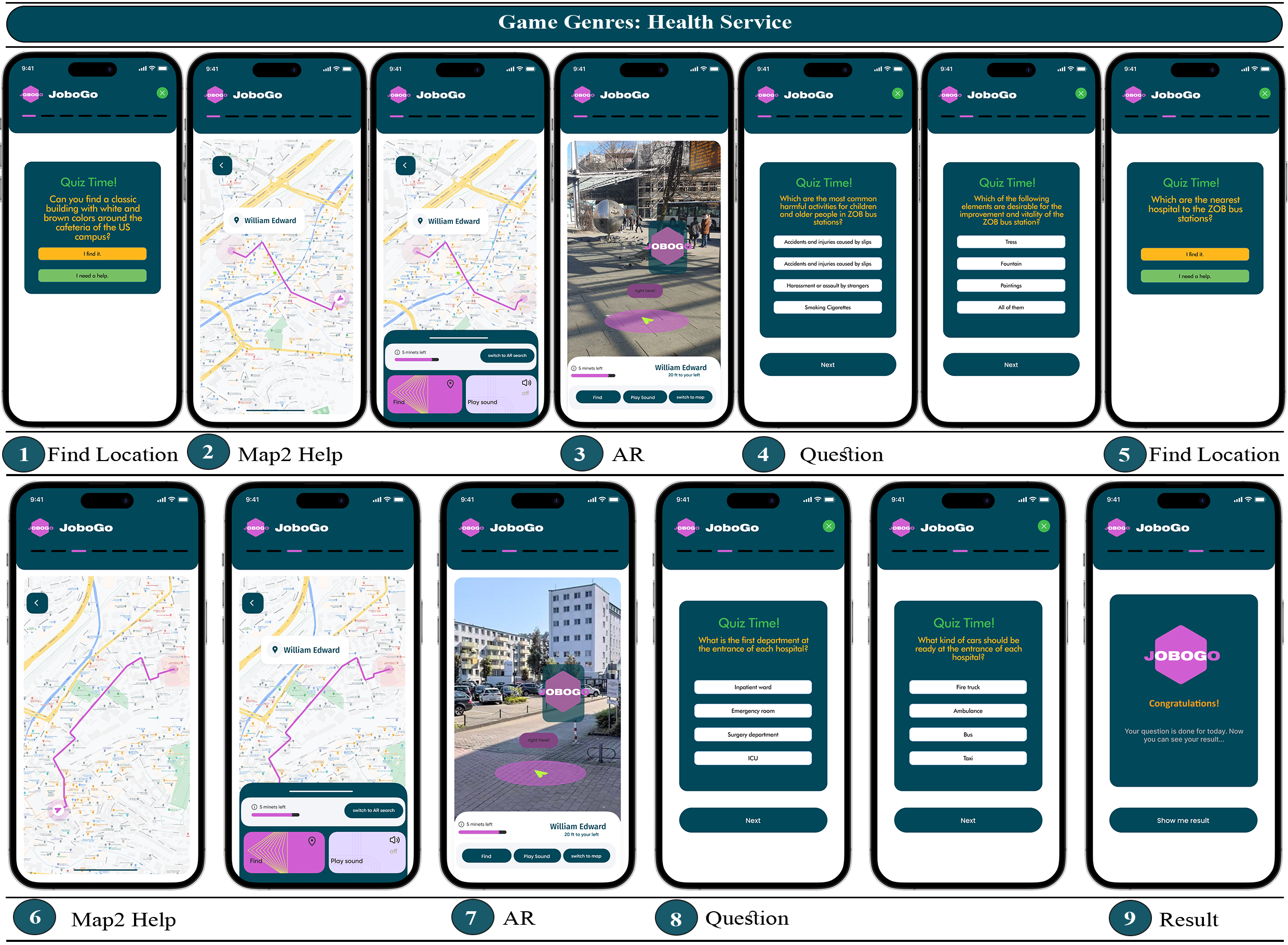
Health Service Category Gameplay
Hospital location finding → Health-related questions → AR
card discovery
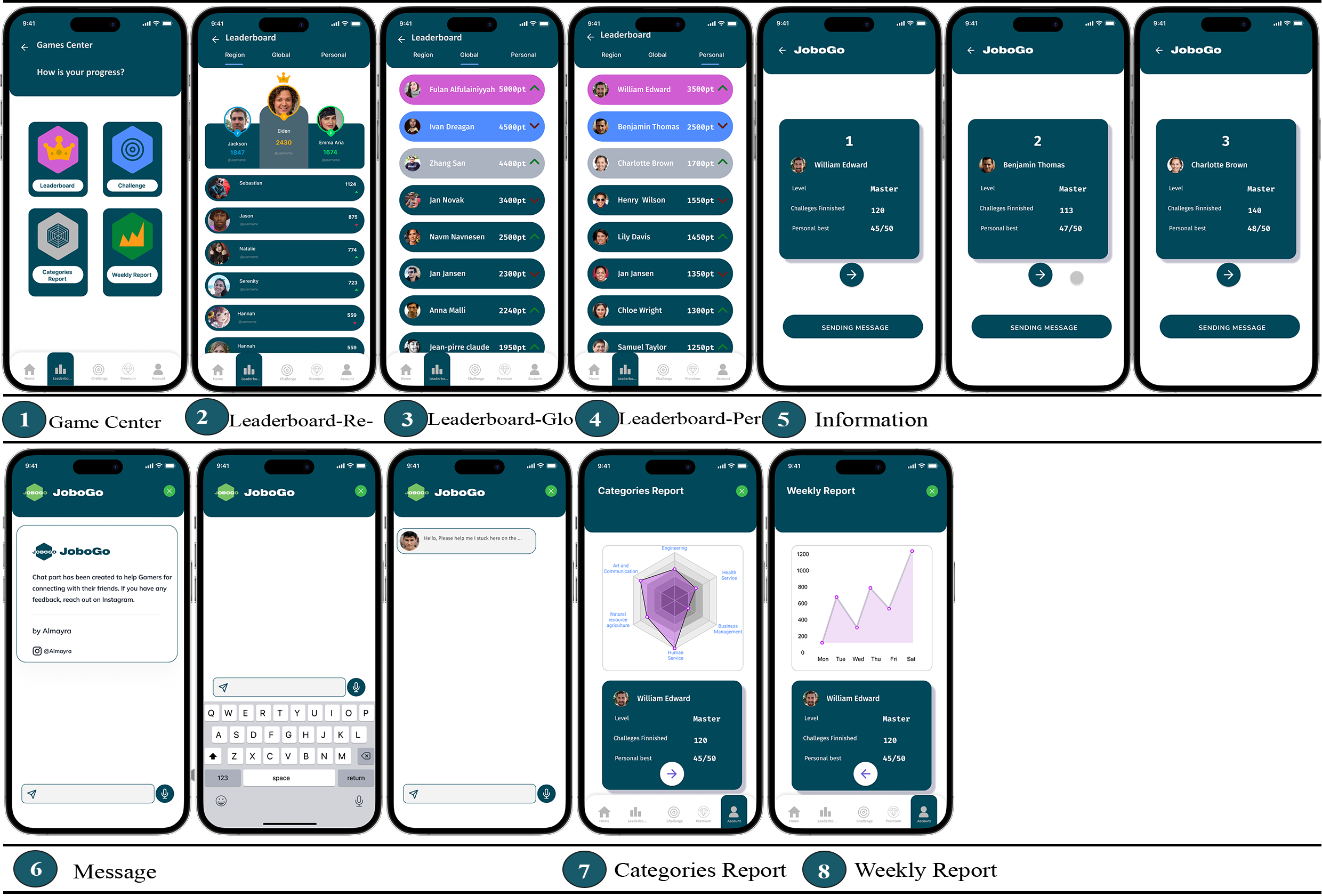
Leaderboard & Social Features
Global, Regional, Personal levels with messaging
functionality
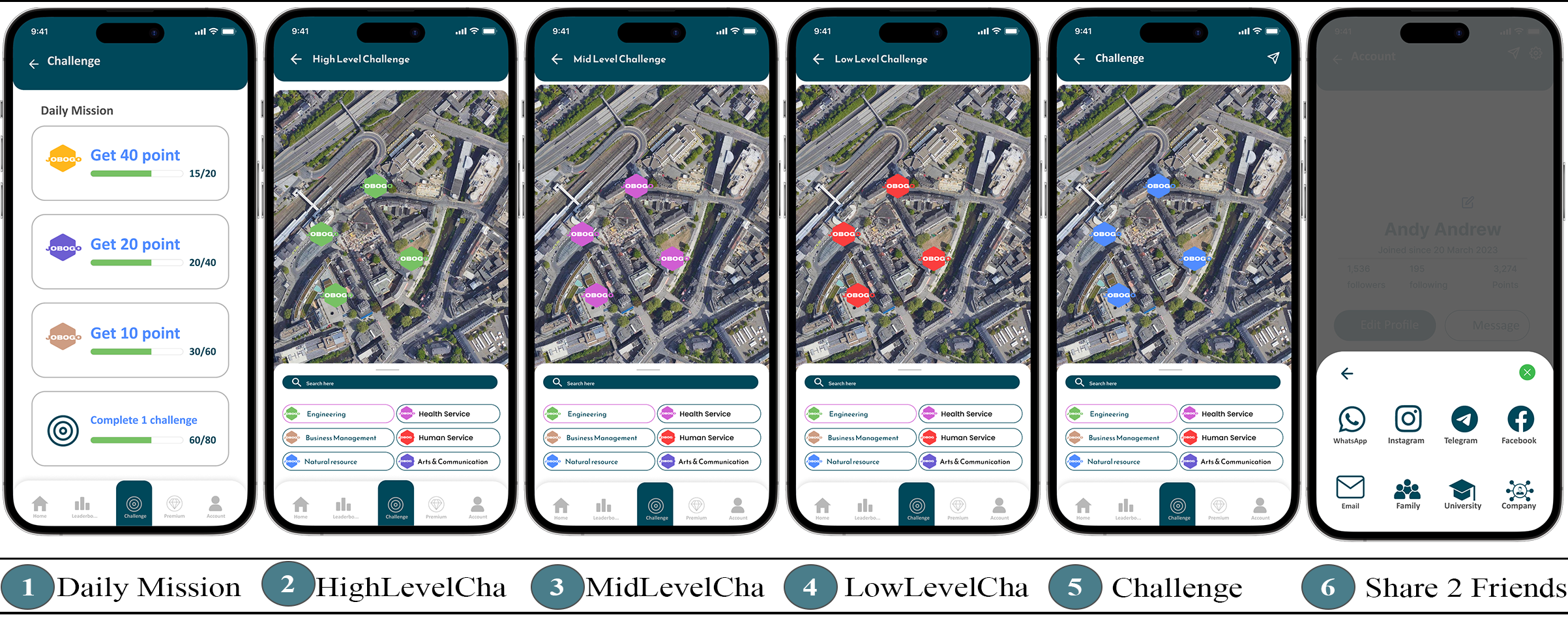
Challenge System
Daily missions (High: 40pts, Mid: 20pts, Low: 10pts) +
Friend challenges (60pts)
Key Features & Functionality
Research Findings & Impact
🔮
AR Location Discovery
Use phone camera to find virtual question cards placed
in real-world locations within 500m radius
📍
Geolocation Technology
GPS identifies relevant industry locations (hospitals,
studios, offices) and generates contextual questions
⏱️
Time-Based Scoring
Points awarded based on discovery speed, accuracy, and
independence (max points for no-help completion)
🏆
Gamification System
Daily challenges, friend competitions, leaderboards
(global/regional/personal), achievement badges
Distance Optimization: Users uncomfortable walking
>800m - reduced to 500m maximum for optimal experience
Location Flexibility: Removed fixed location selection
- users now find questions anywhere, making game accessible
globally
AR Enhancement: Camera-based AR card finding increased
engagement and "game feel" significantly
Social Motivation: Friend challenges and leaderboards
drove sustained engagement and competition
Visual Feedback: Spider diagrams effectively
communicated strengths; users requested more detailed
analytics
Onboarding Critical: 6-page tutorial reduced confusion
and increased feature discovery
Co-design with HCI students ensured technical feasibility
and game design best practices
Industry expert input validated question relevance and
realism across all 6 career fields
Iterative testing with fresh participants (P5-P9) provided
unbiased feedback each phase
Living Lab approach captured authentic usage scenarios and
environmental factors


 Video Presentation of RoboMin Interface
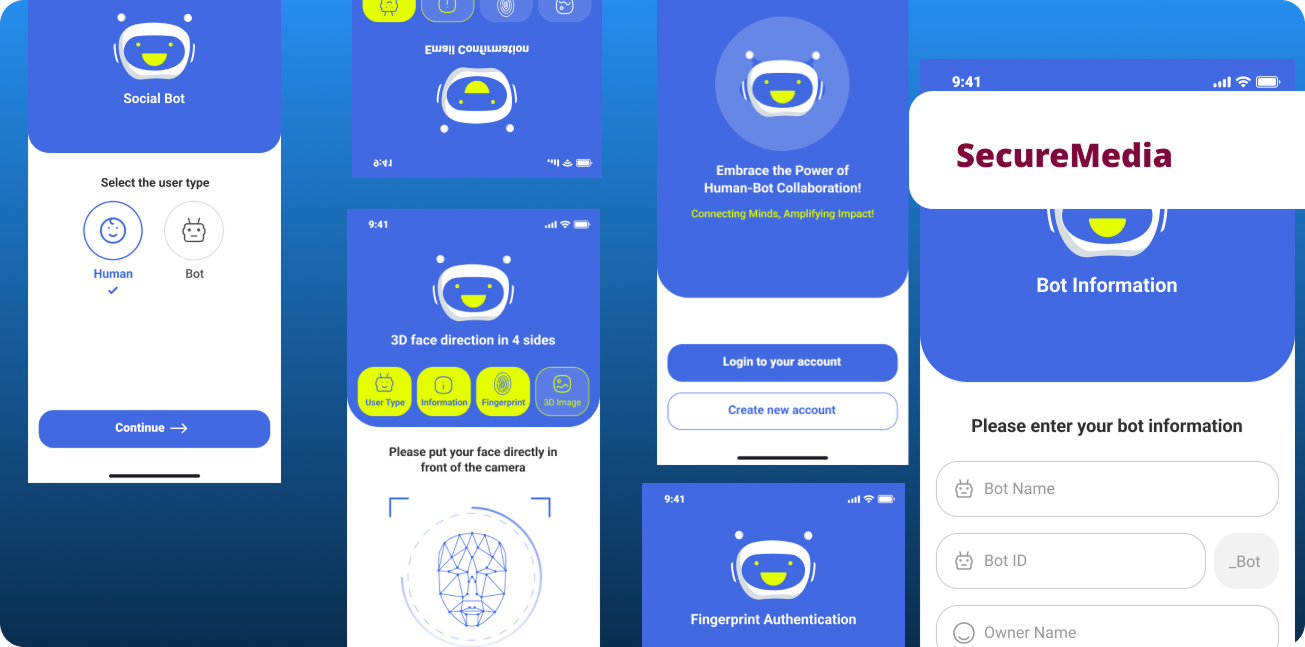


SECURE MEDIA
,
Integrating Human and AI in Social Media, safely
It is an innovative idea to connect AI and humans in social media, which was published in the CHI
Conference as a short paper.

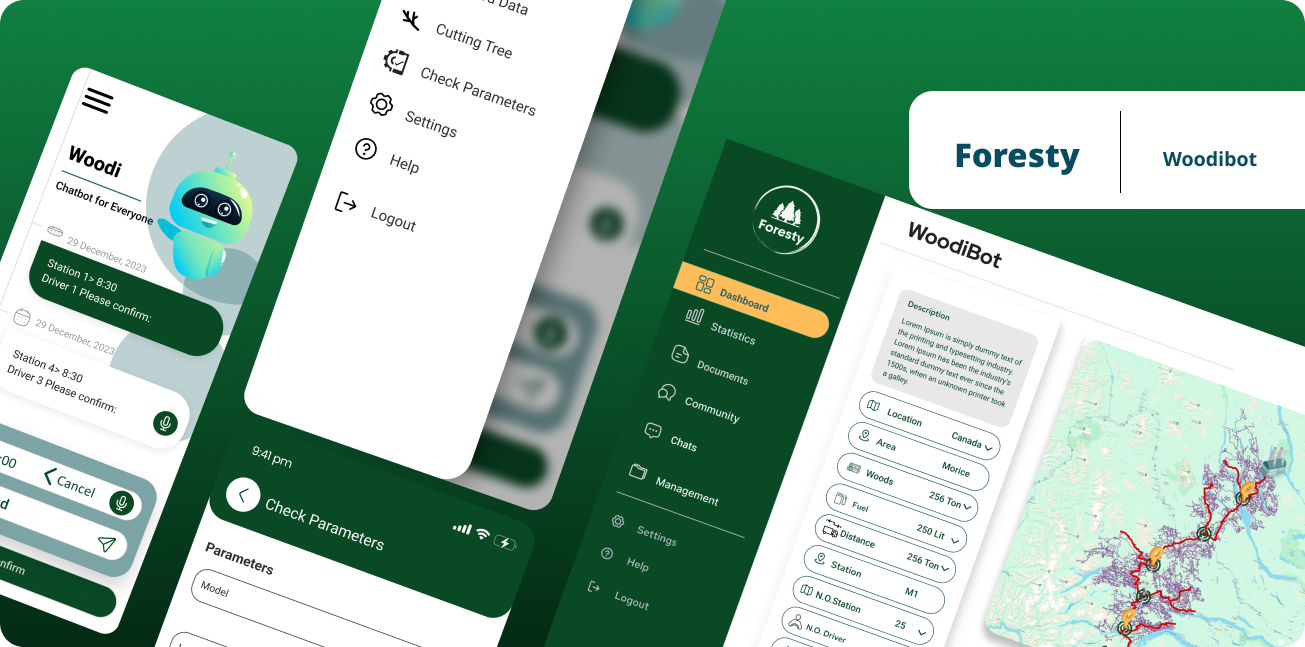

Design For Harvesting Woods in Forest: Forestry AI-Based System
It is an AI-based application empowered by Woody Bot, which is responsible for the connection between
users for harvesting wood in the Forest sustainably.

2024

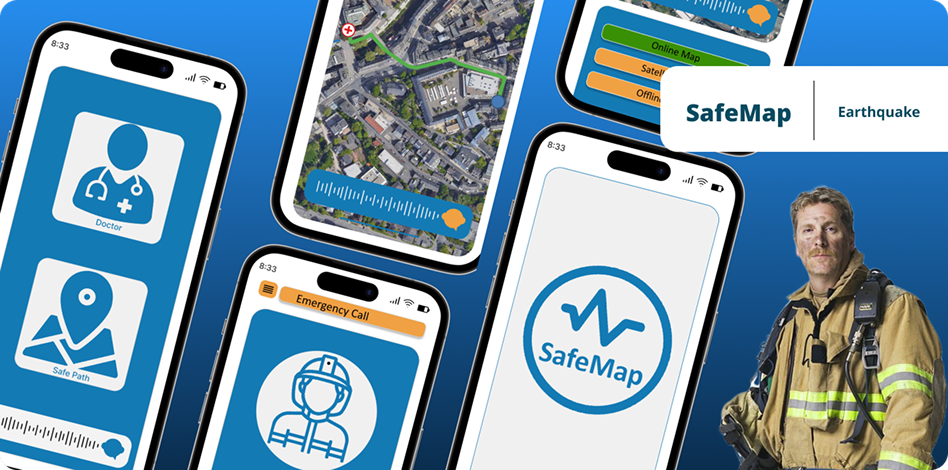

SAFEMAP+ Earthquake Navigation
Academic Research
We're just into 2023 and we have big news! Our biggest design idea for finding safe routes during an
earthquake has been accepted for publication.

11th Jan 2023

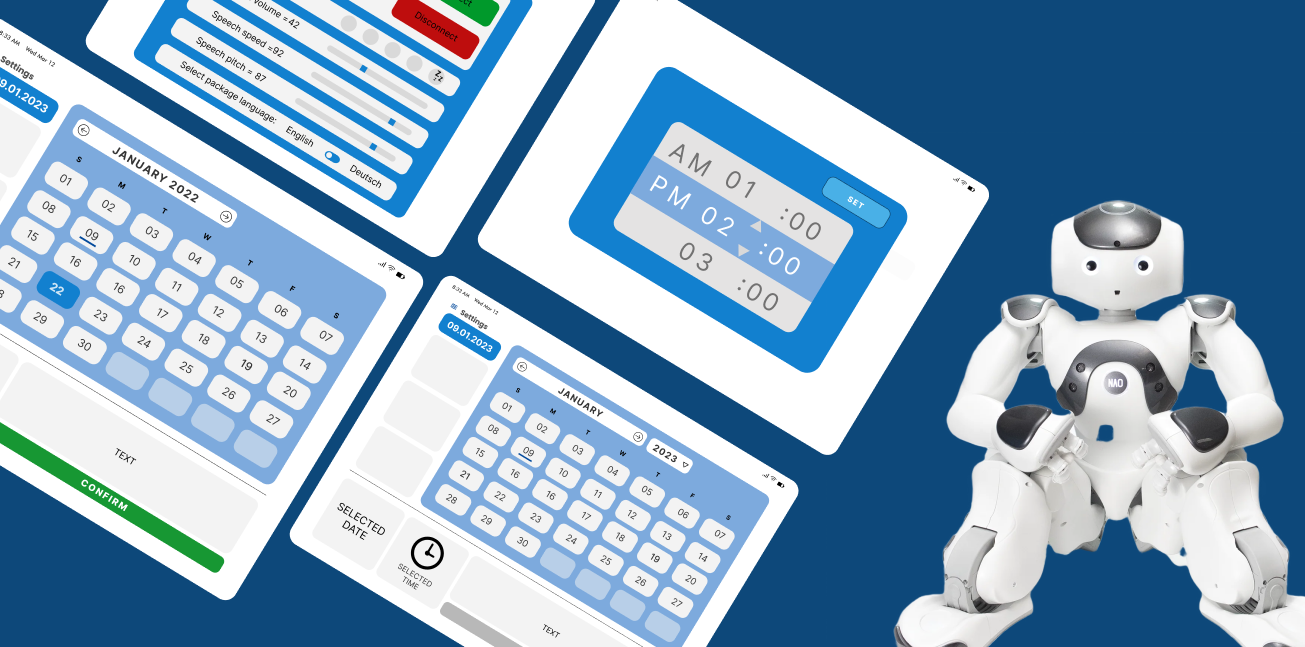
RoboMind + A Game for finding career paths
2022
UI & UX DESIGN - Educational DIGITAL PRODUCT
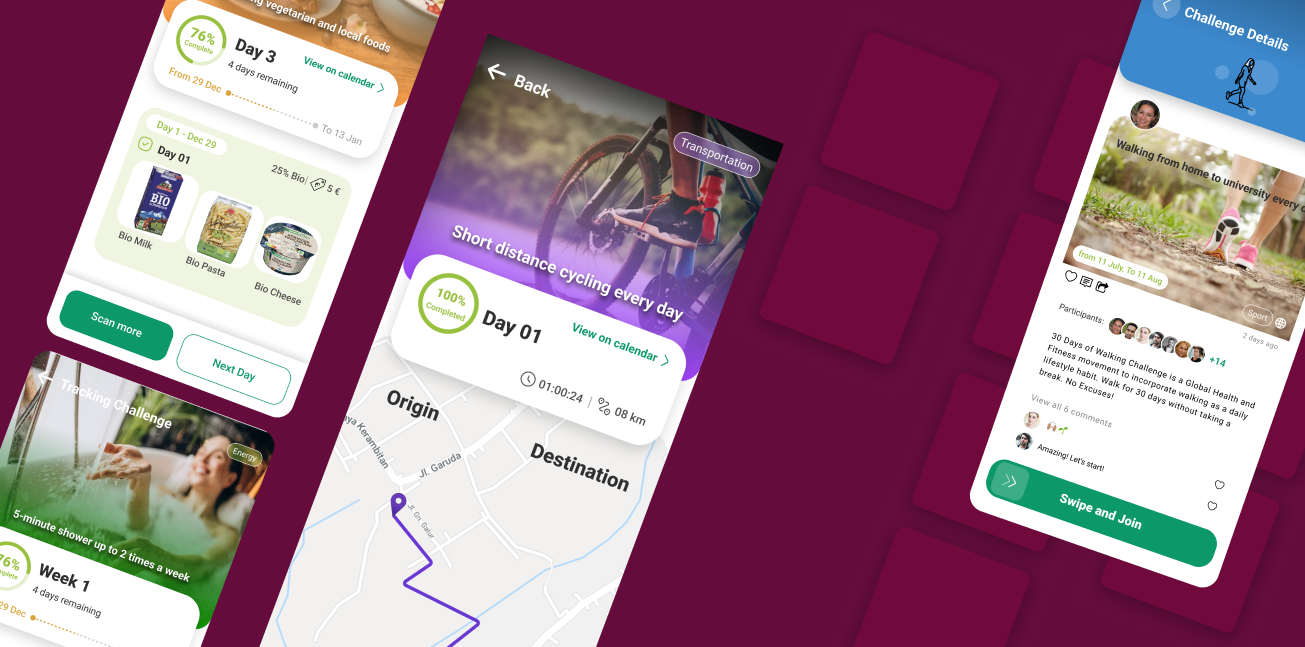
CHALLENGE ACCEPTED! A Social Media for sharing environmental challenges with people.
2023
STRATEGY - PRODUCT DESIGN - dev